 An official website of the United States government


 ) or https:// means you've safely connected to the .mil website. Share sensitive information only on official, secure websites.


DHA R&D-MRDC Takes Center Stage on First Day of MHSRS 2025
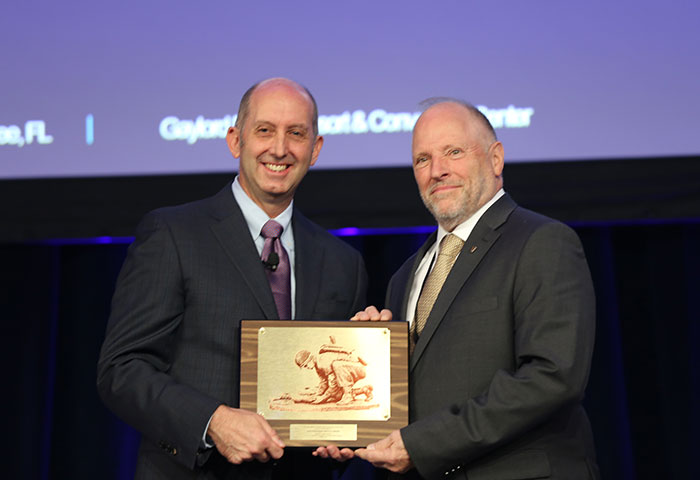
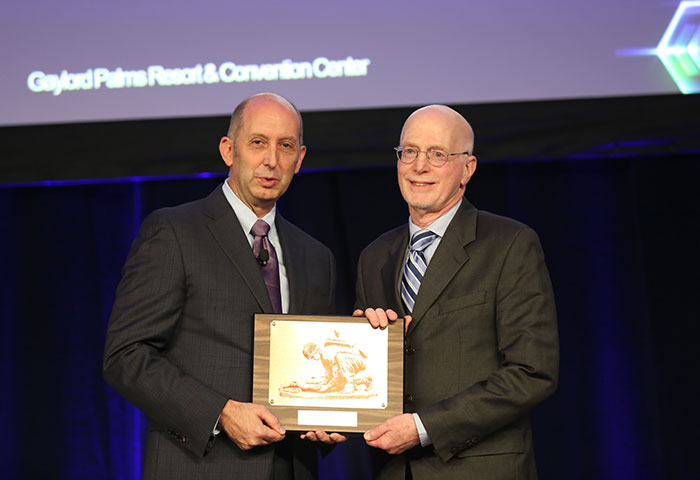
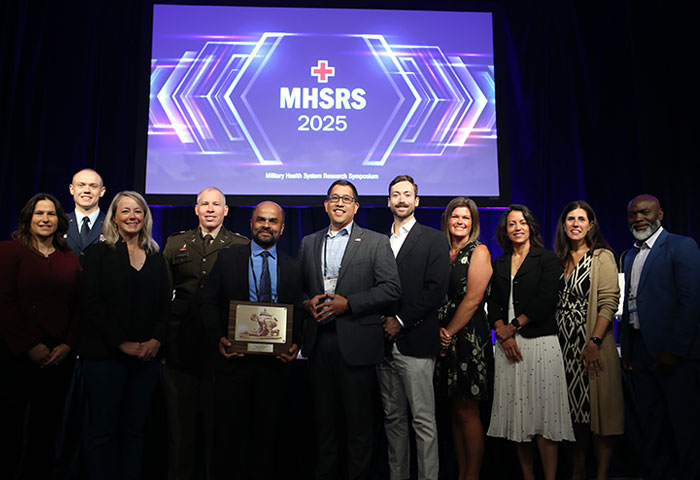
KISSIMMEE, Fla. — Three of the Defense Health Agency Research & Development-Medical Research and Development Command's most distinguished senior researchers were recognized for their noteworthy accomplishments in military medicine throughout the previous year during an awards ceremony at the opening plenary session of the 2025 Military Health System Research Symposium on Aug. 4. Their achievements supporting the physical and psychological health of the Warfighter demonstrate DHA R&D-MRDC's vital contributions to MHSRS.
"MHSRS is a unique and valuable opportunity for DHA to showcase the many ways our military medical innovations improve Warfighter survivability and lethality, enhance force protection and readiness, drive medical modernization throughout the DHA enterprise, and contribute to deterrence and posture at the theater and global levels as part of the DHA's role as a Combat Support Agency," says Maj. Gen. Paula Lodi, DHA R&D-MRDC's commanding general. "It's also a chance for us to explore potential collaborations with some of the brightest minds across the DOD, academia, international partners, and industry, which will ensure we continue to develop and deliver solutions that will protect and sustain our Warfighters in every environment."
Dr. Karl Friedl, the U.S. Army's chief physiologist assigned to the U.S. Army Research Institute of Environmental Medicine, and former commander of DHA R&D-MRDC's Telemedicine and Advanced Technology Research Center, received an award for distinguished service for his work on the DOD's Optimizing the Human Weapon System program, a force-wide evaluation of the use of data collected from wearable sensors to inform decisions about Warfighter readiness. In this role, Friedel is responsible for forming broad multidisciplinary collaborations and conducting research on Soldier health and performance, with an emphasis on translating biomedical research findings into implementation for Soldiers and veterans.
A research team from the Biotechnology High-Performance Computing Software Applications Institute led by Dr. Jaques Reifman, BHSAI's senior researcher and director, was recognized for outstanding research accomplishments by a team for the development of the Automated Processing of the Physiological Registry for Assessment of Injury Severity Hemorrhage Risk Index. APPRAISE-HRI is an AI-enabled decision-support system designed to help combat medics triage trauma casualties for hemorrhage risk near the point of injury. Not only is APPRAISE-HRI the first triage system ever cleared by the FDA for assessing hemorrhage risk of trauma patients, it is also the first – and so far, only – AI-enabled Software as a Medical Device from the DOD approved by the FDA.
A multidisciplinary team of regulatory affairs, compliance, and clinical support professionals from the Office of Regulated Activities led by Dr. Chandar Thakur, chief of ORA's Medical Devices and Diagnostics Branch, was recognized for outstanding program management by a team for their success in obtaining marketing clearances by the FDA for five medical products last year – which is believed to be a record number for the office. The products meet urgent military medical requirements for solutions that ensure Warfighter resilience, adaptability, and lethality. The team's success in fielding these products directly contributes to DHA R&D-MRDC's ability to improve combat casualty care and enhance human performance.
Col. Elisa O'Hern, commander of the U.S. Army Institute of Surgical Research, part of DHA R&D-MRDC, emceed the award ceremony.
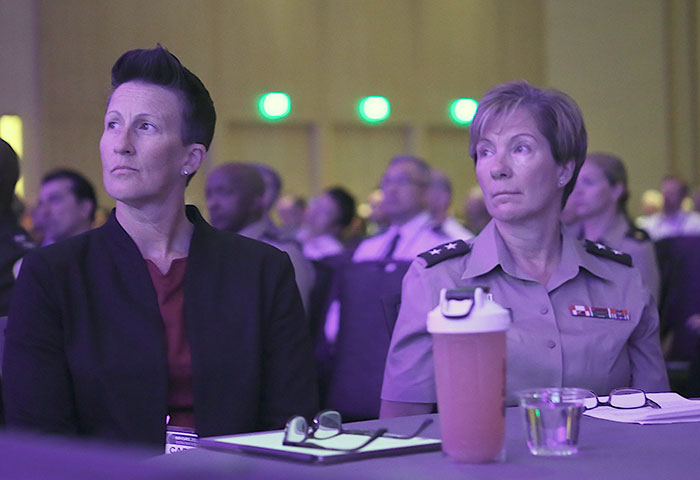
Over 200 DHA R&D-MRDC experts in military infectious diseases, combat casualty care, military operational medicine, chemical biological defense, and clinical and rehabilitative medicine are attending the annual four-day event, the DOD's premier medical science research and development meeting. They will be leading panel discussions, presenting their latest research findings, and participating in poster sessions throughout the symposium.
In addition to participating as speakers and presenters, representatives from the Office of Medical Technology Transfer, Office of Regulated Activities, Office of Human and Animal Research Oversight, U.S. Army Medical Research Institute of Infectious Diseases, U.S. Army Aeromedical Research Laboratory, and Walter Reed Army Institute of Research will be on hand in the exhibit hall to showcase their work in deployable treatments, trauma care solutions, and lifesaving medical devices designed to ensure our forces remain resilient, adaptable, and lethal in any scenario.
More than 3,000 representatives of the military services, industry, and academia are attending MHSRS. The theme of this year's symposium is "Supporting the Deployed Warfighter through Military Medical Research."
In his keynote address, Acting Assistant Secretary of Defense for Health Affairs Dr. Stephen Ferrara emphasized the critical role that research plays in enabling the Military Health System to ensure peak Warfighter survivability and readiness.
"We have to consider the research we're doing, the testing we're conducting, and the solutions we're fielding – are they relevant and are we moving quickly enough?" Ferrara asked. "We need to design, test, and field medical solutions with an emphasis on agility, adaptability, and speed. Everything we do in military medicine comes back to one question: Can we save a life when it matters most?"