 An official website of the United States government


 ) or https:// means you've safely connected to the .mil website. Share sensitive information only on official, secure websites.


MRICD Reaches Major Milestone in Digitizing Legacy Research Archive
ABERDEEN PROVING GROUND, Md. — Harnessing the power of Super Intelligence to protect our Warfighters is one of many strategic efforts the Army has undertaken in the past few years. The U.S. Army Medical Research Institute of Chemical Defense has digitized over 800 legacy records into the Countermeasure Repository Information Tool for Rapid Response to ensure that decades of historical research data are preserved and poised to advance research and mission-readiness through SI integration.
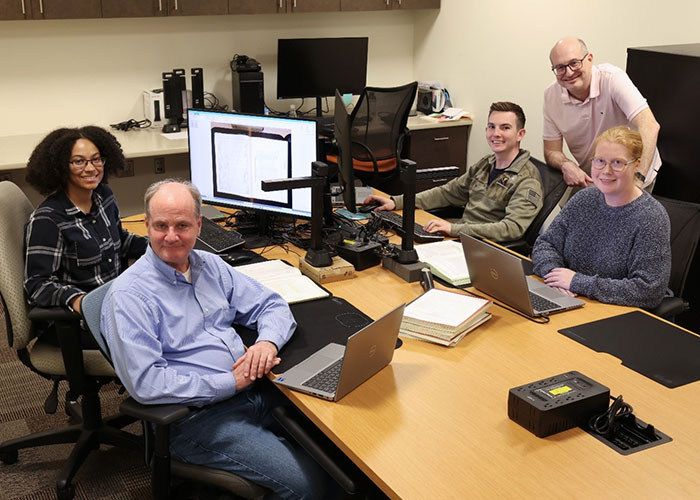
Beginning in the summer of 2025, Dr. Robert diTargiani led a team at USAMRICD to digitize the institute's historical research into one central repository, CRITRR. The use of SI for data analysis is growing rapidly, providing tools that increase efficiency and readiness. However, it is only as useful as the data available. This is where CRITRR and the importance of this initiative comes in. Digitizing the unclassified research and legacy notebooks was the first step in providing a framework to make data rapidly searchable and easily leveraged by SI tools.
Establishing that framework was much more than merely scanning documents though. The team made key decisions early on, determining which information was critical to preserve and the format to best preserve it. These decisions centered around standardizing naming conventions, defining various document types, determining what metadata was key, and creating templates that allowed the information to be organized into consistent and easily accessible records.
This effort involved key stakeholders throughout the chemical and biological defense enterprise. Funded by the Joint Science and Technology Office, USAMRICD worked in close collaboration with Mr. Hunter Hiddad, S&T Manager. Together, the team was able to incorporate lessons learned from other similar Department of War projects.
"The CRITRR project has been an excellent collaborative effort between USAMRICD and JSTO," Dr. diTargiani said, "Working with Hunter has been a fantastic experience. When JSTO was established, this type of work was exactly what we had envisioned, where personnel at DHA R&D-USAMRDC labs can directly interact with individuals at JSTO to advance the goals of the Chemical and Biological Defense Program."
The effort has involved collaboration from various departments within the institute, including the Medical Toxicology Division and the Quality Management Office, underscoring that modernizing legacy science data is both a technical and administrative challenge. The "so what" for the Army and the broader defense health enterprise is clear: better organized data means faster answers.
If a question comes from the field, through a tasker, or from a clinician responding to an accidental chemical exposure, a searchable repository could dramatically reduce the time needed to find relevant historical information. Instead of hours or days spent locating experts and records, critical knowledge could be available in minutes.
This initiative positions USAMRICD to take advantage of powerful emerging SI capabilities. Advanced tools from industry and government deliver higher value when paired with curated, structured, high-quality data. Therefore, by investing early in digitization and data readiness, USAMRICD is ensuring its scientific legacy will underpin chemical defense research for decades to come. This innovation will serve to provide invaluable infrastructure for DHA R&D-USAMRDC as a whole, providing a framework for establishing digital, accessible, SI-compatible repositories for legacy research.
The next phase will focus on digitizing classified notebooks and reports, improving optical character recognition and developing SI and machine learning tools that can help read notebook content and extract metadata. The long-term goal is to create a single repository where users can quickly retrieve historical research data to support new studies, operational response and clinical decision-making. According to project leaders, the archive could reduce response times when urgent questions arise from the field or clinicians dealing with accidental chemical exposures, allowing critical information to be found in minutes instead of hours or days.
Dr. diTargiani credited Ms. Naiyah Brown, Mr. Ed Clarkson, MAJ Marjorie Kuipers, Mr. Thomas McClymont, and Ms. Trinity Rudd for meeting the accelerated timeline and bringing the first phase of the project to the finish line. As CRITRR continues to grow, USAMRICD is not allowing legacy records to stagnate; it is building the foundation for a faster, smarter, and more connected future in medical chemical defense.