 An official website of the United States government


 ) or https:// means you've safely connected to the .mil website. Share sensitive information only on official, secure websites.


Army Researchers Modernize Helicopter Seat Standards to Enhance Soldier Protection
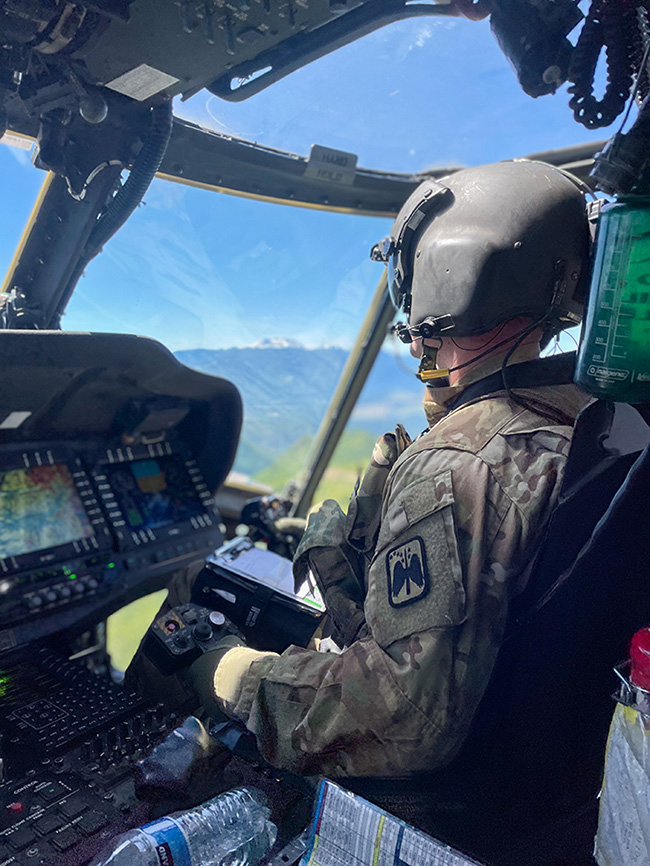
When a military helicopter crashes, a soldier's seat is often the last line of defense. The design and performance of that seat can mean the difference between walking away and suffering life-altering injuries. For decades, the United States Army Aeromedical Research Laboratory (USAARL), part of the Medical Research and Development Command (MRDC), has led the way in understanding crash induced injury and improving crashworthy seat standards for military rotary-wing aircraft. Current research seeks to update this information to reflect modern realities.
Since the Army first began investigating rotary-wing crashes and developing standards for seats and restraints in the 1970s and 1980s, nearly every aspect of the operational environment has changed. Modern aircraft carry heavier occupants, as today's soldiers have greater average stature and body mass and wear more gear. Tactical flight profiles generate higher crash energy levels. Seating configurations have diversified, including troop seats and litter positions.
Soldiers face new blast and ballistic threats and operate in extreme environmental conditions. These changes demand a new approach to crashworthy seat design and testing.
Recent studies are informing the development of new standards that reflect these realities. Researchers are evaluating how modern equipment, mission profiles, and aircraft performance affect injury risk, working to ensure that every soldier has the best possible chance of survival and readiness in the event of a crash.
A leader in crashworthiness research
Danielle Rhodes, a researcher at USAARL, has dedicated her career to the intersection of biomechanics, injury risk, and military aviation safety. Her work focuses on crashworthiness—specifically, the performance of seats and restraint systems in survivable helicopter mishaps. Guided by her mentors, B. Joseph McEntire and V. Carol Chancey, (PhD), Rhodes approaches every project with the principle that the aircraft seat is the soldier's last line of defense in a crash.
"I begin all my crashworthiness efforts with that thought," Rhodes said. "How can we best inform the military community on mitigating the energy to the occupant during a dynamic event."
Rhodes and her colleagues recently completed a critical review of civilian and military crashworthy aircraft seat performance requirements. She has presented these findings to Army flight surgeons and the Aerospace Medical Association, making the case that civilian standards are not an adequate substitute for military specifications, and relying on them can put military members at risk.
A gap in standards
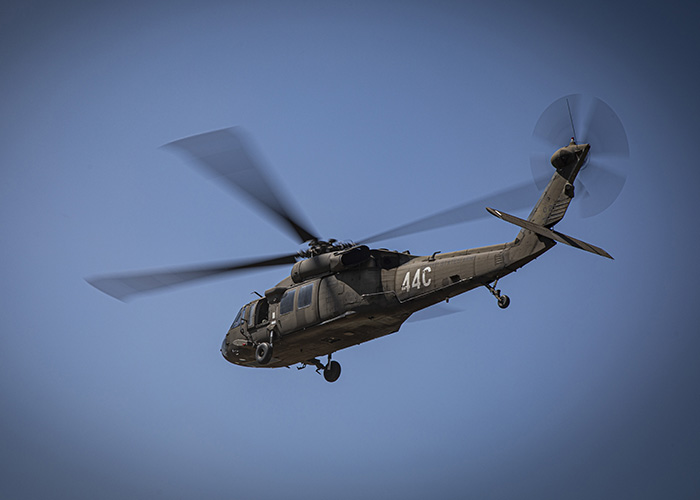
The study by Rhodes and her team revealed a critical gap: many of the military standards that once governed crashworthy seat design have been canceled or rendered inactive. In their absence, military program managers and designers are often forced to rely on civilian standards, which do not fully account for the unique demands of military operations.
Their findings are clear: civilian rotary-wing seating standards are less rigorous than legacy military specifications and are not designed to replicate the exposures experienced in military operational environments. Adopting these civilian standards without modification could increase the risk of injury or death to our service members in otherwise survivable helicopter mishaps.
Innovative research and future directions
To address these challenges, USAARL researchers begin by analyzing data from the U.S. Army Combat Readiness Center, to identify injury patterns and outcomes. This real-world data helps identify the most common and severe injuries—such as spinal injuries—that occur in helicopter crashes.
Building on these findings, researchers use advanced laboratory equipment, including a vertical acceleration tower, to simulate the crash pulses soldiers might experience in real-world incidents. The device allows for precise control of impact energy and direction, enabling researchers to test how different seat designs and configurations perform under military-relevant conditions.
"We have updated data specific to anthropometry, current equipment, and a variety of seat configurations. Using the U.S. Army Combat Readiness Center data, we identify the crashes and injuries seen in the field and program the vertical acceleration tower to recreate those scenarios in the lab," explained Rhodes. "We've done our very best science to protect our soldiers—to enable them to egress the vehicle, stay in the fight, and get home."
Testing includes the use of anthropomorphic test devices (ATD) to evaluate spinal injury risk and the effectiveness of various seating systems. These efforts directly inform recommendations for updated standards and provide critical data to guide the design of safer, more effective crashworthy seats.
Current research is limited to vertical trajectory crashes. An important area for future study is horizontal trajectory crashes, which can result in different injury patterns. USAARL has acquired equipment capable of recreating these crash scenarios and hopes to secure a facility to house it, enabling expanded research of seat performance in frontal, lateral, and oblique impact directions. These conditions represent the range of occupant impact loading directions of modern and developmental aircraft.
A commitment to the warfighter
USAARL's ongoing research is part of a working group dedicated to updating and reactivating military crashworthiness standards. The goal is to provide clear, rigorous requirements for seat designers and program managers, ensuring that every new aircraft and retrofit meets the highest standards of protection.
The need for modern, military-specific standards is more urgent than ever. The work of MRDC researchers ensures that the next generation of Army aviators will have the best possible protection—on every mission, in every environment.
At the heart of this effort is a simple but powerful commitment: to use the best science and engineering to protect soldiers. As USAARL's research continues, the focus remains on readiness, survivability, and the modernization of military medicine—ensuring that the Army's last line of defense is always its strongest.