 An official website of the United States government


 ) or https:// means you've safely connected to the .mil website. Share sensitive information only on official, secure websites.

Suicide Prevention: DHA Research Helps the Military "Connect to Protect"
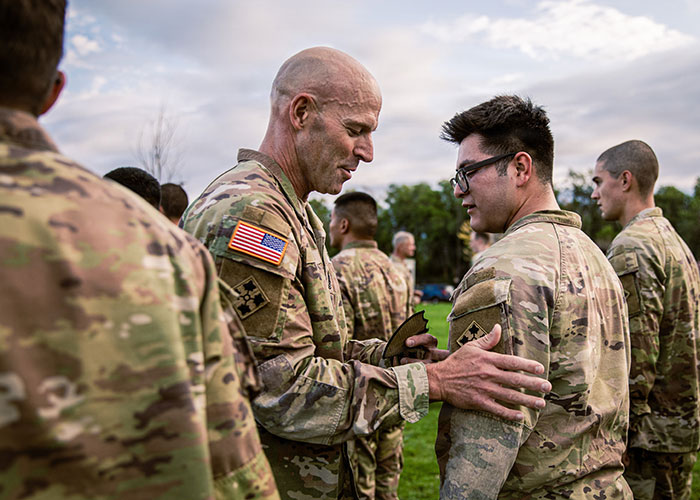
FORT DETRICK, Md. — Suicide is a serious public health challenge. It is the 11th leading cause of death in the United States, and suicide rates have steadily risen over the past decade. In the military, suicide rates have generally followed the same upward trend and remain comparable to, or higher than, those in the U.S. population when age and sex are taken into account.
As the nation observes Suicide Prevention and Awareness Month this September, the Department of War's 2026 theme, "Joining Your Fight. Connect to Protect," emphasizes the power of relationships and shared responsibility. That is not just a slogan; it is a message grounded in research. Studies supported by Defense Health Agency Research & Development have consistently shown that peer support, strong leadership, and connected, cohesive units are key protective factors against suicide. In a collaborative effort with partners across federal agencies and the Department of War, DHA R&D research helps translate those findings into policies, training, and tools that turn "Connect to Protect" into evidence-based interventions.
DHA R&D's work is guided in part by the DoD Suicide Prevention Research Strategy, FY 2020–2030, which focuses on military specific gaps in knowledge and supports the development of effective, evidence based programs to reduce suicide across the joint force. DHA R&D organizations—particularly the Walter Reed Army Institute of Research—help turn that strategy into real world solutions.
Detect: Using data and biology to see risk earlier
A core question in the DoD Suicide Prevention Research Strategy is how to detect and predict suicide risk more effectively—moving beyond self report alone. The strategy calls for improving current screening tools and developing objective approaches such as physiological, genetic, and transcriptomic markers.
At WRAIR's Center for Military Psychiatry and Neuroscience, Integrated Systems Biology branch, Dr. Rasha Hammamieh, is advancing this vision.
"CMPN's Integrated Systems Biology branch has developed a state of the art capability to identify blood and/or saliva biomarkers predictive of suicidal ideation," said Hammamieh. "This capability resulted in blood biomarker panels for PTSD and major depressive disorder and can be used for suicidal ideation assessment and prevention. ISB has published manuscripts describing transcriptomic and genetic biomarkers for suicidal ideations."
This work supports the strategy's goal of identifying individual-level risk factors and exploring whether objective early warning signs can help clinicians and leaders target early intervention to those most at risk.
Protect: Brain health and resilience
Alongside biological detection, protecting brain health and resilience remains at the forefront of DHA R&D's suicide prevention portfolio. The WRAIR Center for Military Psychiatry and Neuroscience's Blast Induced Neurotrauma branch, led by LTC Matthew LoPresti, is exploring how operational stressors interact with psychological health and suicide risk.
"BINT is proposing new work to look at the interplay between blast exposure and stress," LoPresti noted. BINT has preliminary data that suggest there may be acute and chronic psychological health symptoms associated with years of cumulative exposure to low level blast. LoPresti added that "one of the most common complaints from Warfighters who are routinely exposed to blast as part of their everyday duties is irritability and interpersonal challenges." The BINT team is also planning to test the hypothesis that elevated stress levels may exacerbate other health and performance effects of blast exposure in their pre-clinical and human studies. This new programmatic approach may reveal critical risk factors as well as mitigation strategies relevant to suicide prevention.
At WRAIR West, researchers are testing innovative approaches like interoception training, which helps Service Members better recognize internal bodily signals tied to stress and emotion. Together, these projects support the DoW's focus on protecting brain health and building strong teams that can recognize and respond to distress.
Connect: Training, support, and shared responsibility
The "Connect to Protect" theme underscores a key insight from suicide research: connection—within units, families, and communities—is a powerful protective factor. The department's Suicide Prevention Research Strategy calls for interventions that extend beyond clinical settings, including leadership engagement, family and peer support, and community based efforts that reduce stigma and encourage help seeking.
DHA R&D research is helping the Department understand what the connection looks like in practice. A recent study published in Military Medicine titled "Military Officers' Experiences with Soldiers' Suicidality," found that support from peers and noncommissioned officers was the most frequently cited facilitator to care. Officers emphasized that Army training, including the "Ask, Care, Escort" (ACE) program, and clear communication between command and behavioral health were essential when responding to Soldiers in crisis.
Building on this foundation, WRAIR and the Defense Centers for Public Health–Aberdeen collaborated to modernize ACE into the ACE Base +1 curriculum. ACE Base +1 emphasizes earlier intervention, peer support, and a shared responsibility for prevention across the military community—reinforcing the idea that suicide prevention is not solely the job of behavioral health professionals, but a mission shared by Soldiers, Civilians, and families.
Connection also matters after a suicide. WRAIR, with support from the Defense Suicide Prevention Office, is studying postvention—what leaders and units do after a suicide, and how those actions can reduce the risk of additional harm.
"Through interviews with leaders across the services, we are gathering evidence to inform future postvention training and guidance," said Dr. Amy Adler, study lead and senior scientist at WRAIR's Center for Military Psychiatry and Neuroscience. "Understanding the perspective of leaders during postvention is essential for tailoring recommendations to support units going through what can be such a challenging time."
DSPO's Postvention Toolkit for a Military Suicide Loss already provides structured recommendations to support units and families after a suicide; WRAIR's work will help ensure that this guidance reflects leaders' real world experiences and needs, and that leaders are better prepared to communicate, support their people, and connect those affected to care.
Potential signs of progress
Against this backdrop, the Department of War's latest Annual Report on Suicide in the military offers a cautious but encouraging signal. In 2024, deaths by suicide across the total force decreased 11% year over year (471 in 2024 versus 531 in 2023), including a 16% decrease in the Active Component and a 14% decrease in the Reserve, although rates increased in the National Guard. These rates take age, sex and size of the population into account. The report notes it is too early to know whether this short term decline signals a lasting change, but the reduction is a positive development.
Together, the Department's annual report, the research strategy, and ongoing DHA R&D projects tell a consistent story: prevention works best when we can detect risk earlier, protect brain health and resilience, and connect people to care and to each other.
Every death by suicide is a tragedy that ripples through families, units, and communities. For the Department of War and the Defense Health Agency, this reality makes the research mission both urgent and long term.
As the nation and the military mark Suicide Prevention and Awareness Month, the "Connect to Protect" message reflects a broader Department of War commitment to evidence-based prevention—not just awareness. It is supported by years of DHA R&D and WRAIR studies that continue to shape how the Department understands risk, designs prevention strategies tailored to Servicemembers and their families, and supports those affected by suicide.
If you or someone you know is thinking about suicide, help is available. The Military and Veterans Crisis Line is free, confidential, and available 24/7. In the United States, dial 988 and press 1, text 838255, or chat at VeteransCrisisLine.net/Chat. Service Members and families can also connect with chaplains, behavioral health clinics, Military OneSource, and other local resources.